Sin of Sodom
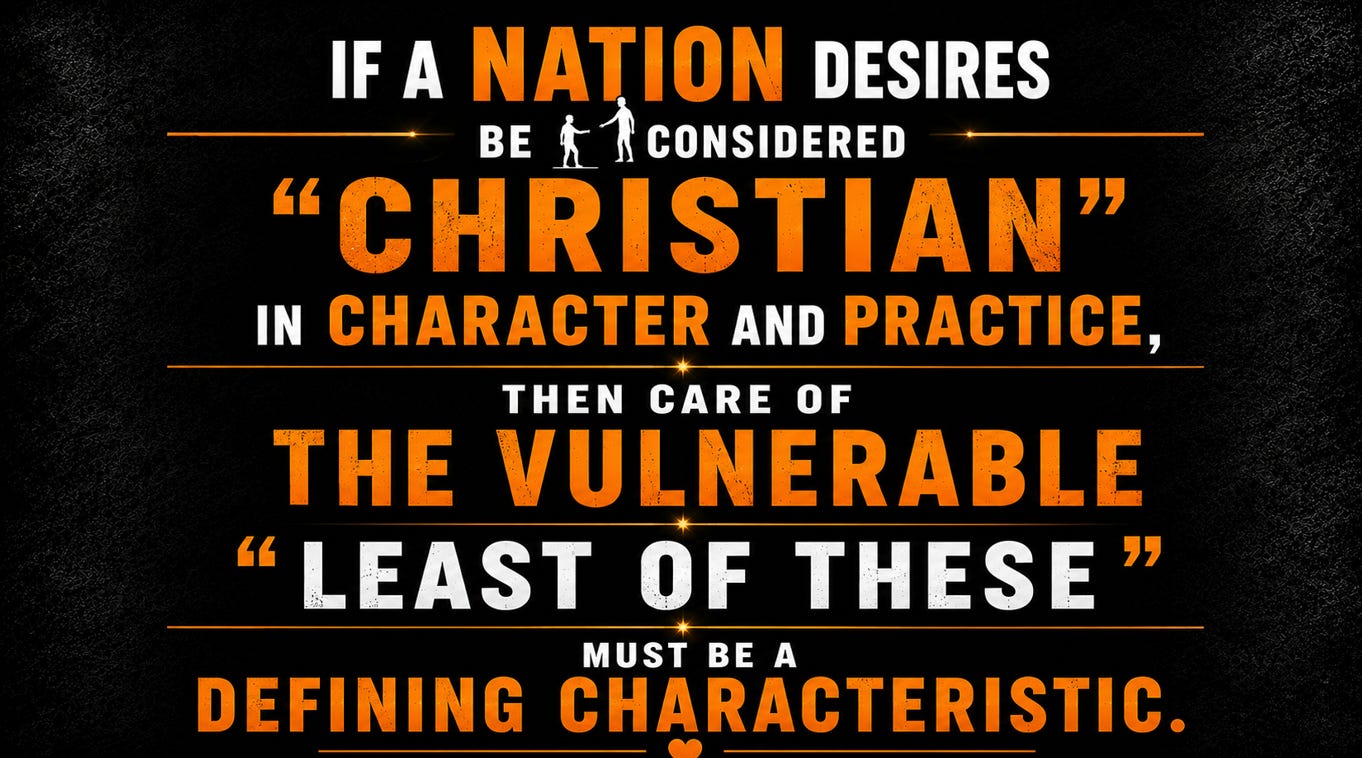
Starting today, how will I help myself see better and do better? How can I become the kind of person, the kind of family, and the kind of church—and help my nation become the kind of nation—that cares for the vulnerable among us?


Pride, excess, and ease
In the 1800’s, London was becoming one of the world's great cities. It had elegant homes, fine art, theaters, and beautiful buildings. But right alongside all that wealth, millions of people lived in crowded, filthy slums.
Charles Dickens wrote about Covent Garden as a place with “a mighty theatre, showing wonderful and beautiful sights to richly-dressed ladies and gentlemen.” In the same breath, he described “miserable children in rags” who, “like young rats, slunk and hid,” huddling together for warmth at night. Benjamin Disraeli called it two nations living side by side: the rich and the poor.1
Most well-off people either didn’t know about the slums or pretended not to know. Those who did often blamed the poor. They’re lazy. It’s their own fault. And remember, this was Victorian England, a nation that saw itself as a stronghold of the Christian faith. I wonder if we’re all that different today.
Ezekiel Said It
When most of us hear the word Sodom, certain sins probably come to mind. But listen to how the prophet Ezekiel describes it:
“This was the guilt of your sister Sodom: she and her daughters had pride, excess of food, and prosperous ease, but did not aid the poor and needy.” (Ezekiel 16:49)
Pride, excess, and ease.
- Pride is thinking we’re better than others.
- Excess is having more than we need, sometimes at someone else’s expense.
- Ease is choosing the comfortable path and not letting others' needs bother us.
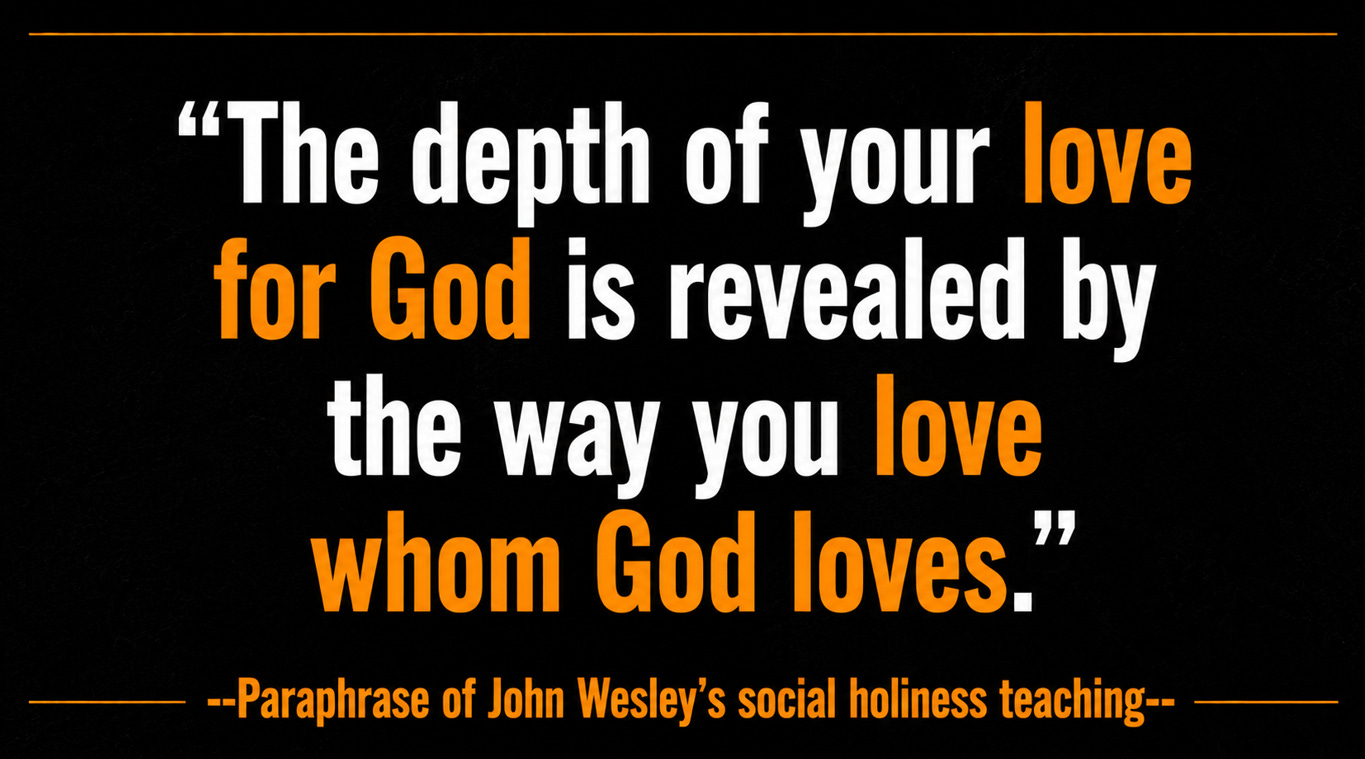
Those things lead to plenty of other sins, but according to Ezekiel, these three seem to be the root of Sodom’s problem. Once again, we don’t have to look far to see these same things in our own nation—a nation that, like 19th-century Britain, considers itself a stronghold of Christian faith. Debates continue to rage with regard to our nation’s responsibility toward the poor, hungry, immigrant, and other vulnerable populations.
Scripture Doesn’t Let Us Off the Hook
From the law of Moses to the prophets to the Gospels to the letters of the New Testament, the Bible never lets us ignore people in need. It doesn’t let us blame them for their situation. It doesn’t let us stand at a distance and pretend we don’t see.
God tells farmers to leave part of the harvest in the field for the hungry (Deuteronomy 24). He set up a Year of Jubilee, so families wouldn’t get stuck in poverty for generations (Leviticus 25). He calls his people to care for the orphan, the widow, and the foreigner (Deuteronomy 10).
And through the prophet Amos, God says something that stings: “I hate, I despise your religious festivals... Away with the noise of your songs!... But let justice roll on like a river.”
Amos isn’t telling us to stop worshiping. He’s saying our worship rings hollow if we ignore the hurting people around us.
Early Church Got Noticed
The first Christians took the teaching of Jesus seriously, especially the parable of the Sheep and the Goats. In the fourth century, the Roman emperor Julian, who was no friend of the church, complained that Christians cared for the poor so well that people were drawn to their faith. They even cared for poor people who weren’t Christians.2
In the Roman Empire of that time, unwanted babies were often left outside to die. Christians went looking for those children and raised them as their own. Over time, I believe, because of early Christians' uncommon compassion, Roman law changed. When plagues swept through cities, Christians stayed and nursed the sick, risking their own lives.
God Gave People Faces
Four years ago, Tamara and I “adopted” a refugee family from Afghanistan. The first time we invited them to our home, we watched the World Cup. We couldn’t speak each other’s language, so we mostly smiled and ate.
It was a wonderful night.
Since then, they’ve worked hard for five years. People have teased their kids and told them to go home. Everything they had in Afghanistan is gone. They’ve waited years for a green card, and they live with fear about what’s next. It seems likely that, after having received promises from the U.S. government of a new home and a place to rebuild their lives, they will lose their green card.
So we pray.
It’s easy to talk about issues from a distance and launch long-range missiles at people and situations we know little about and often understand less clearly. But God gave people faces. Knowing someone’s name and their story changes how we see them. Their needs become real. And I suspect this family has shaped my life more than I’ve shaped theirs.
For Jesus, people always came before policies and politics.
The Sheep and the Goats
In Matthew 25:32–33, Jesus separates people like a shepherd separates sheep from goats. To one group he says, “I was hungry, and you fed me. I was a stranger, and you welcomed me. I was sick and in prison, and you visited me.” To the other group he says, “You did nothing.”
Both groups are surprised. When did we see you in any of those situations, Lord?
Jesus answers, “When you did any of these things for the least of these, you did them for me.”
That story should sting a little.
I think Jesus meant it to.
Where are you on the spectrum?
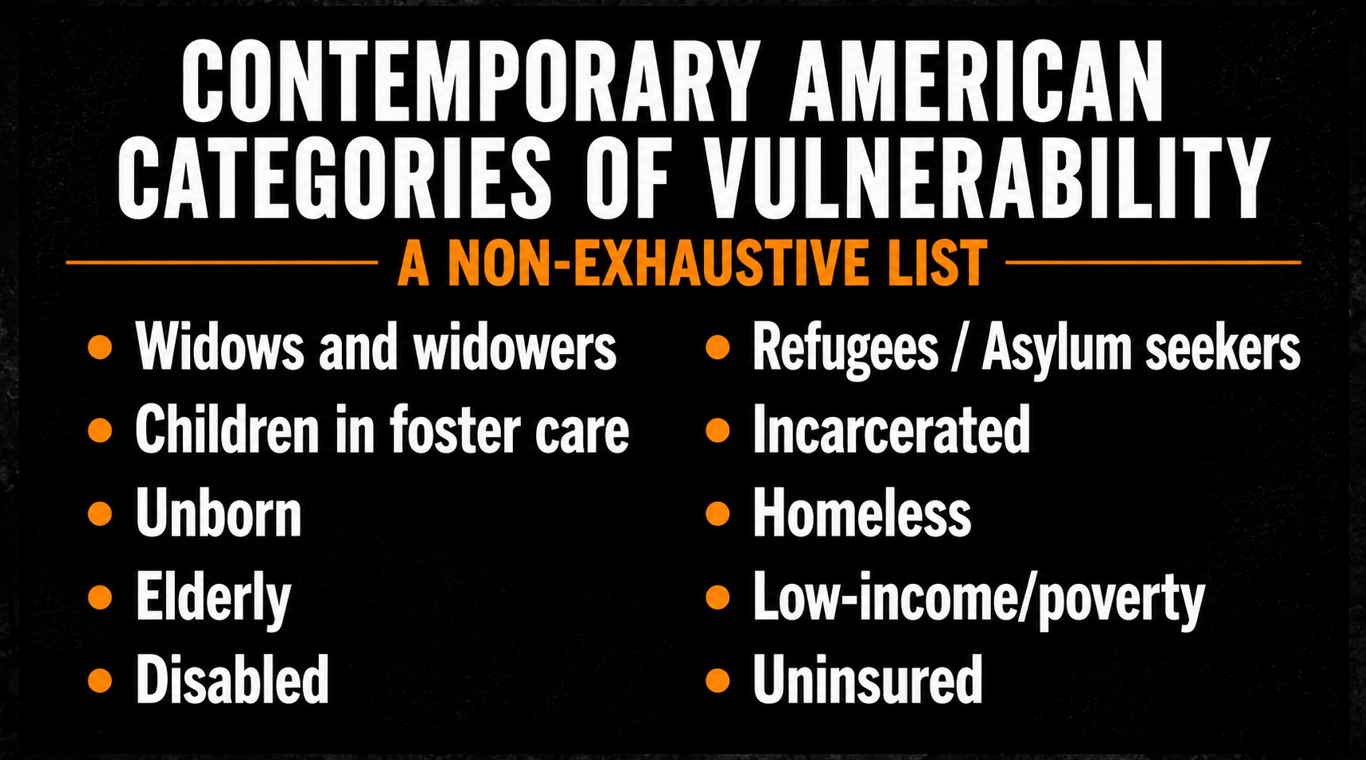
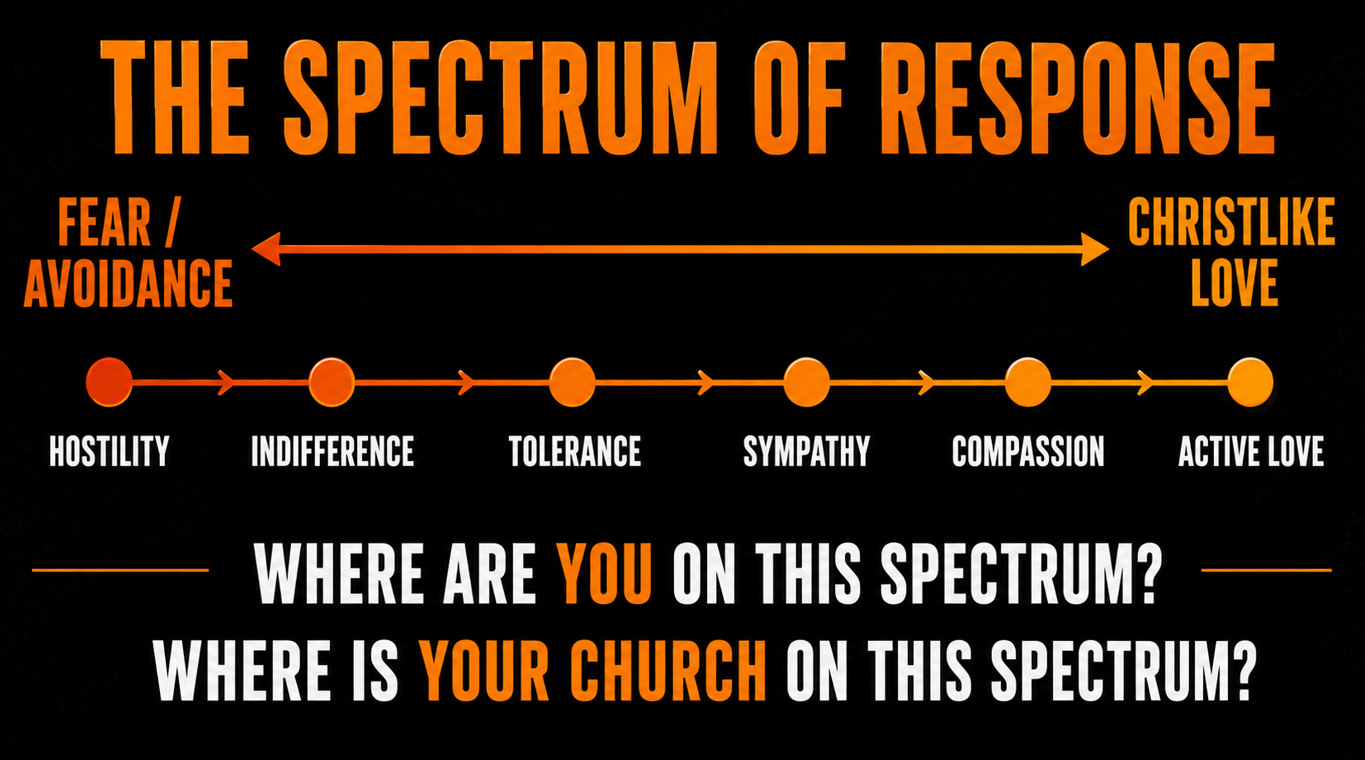
Think of a group of vulnerable people: refugees, foster kids, the elderly, people without homes. Most of us fall somewhere on a line like this:
Hostility
Indifference
Tolerance
Sympathy
Compassion
Christlike Love
We might land in different places for different groups and various situations. Where are you? Based on what Jesus said, which direction do you need to move?
Here are a few simple places to start:
- Learn a name and a story. Sit down and listen. It may be the most important first step.
- Volunteer. Find a local group already helping vulnerable populations—consider Glocal Community Partners in Boise, Idaho. None of us can meet every need, but we can all do something.
- Speak with grace. When people say harsh things about others, you don’t have to join in.
Start Today
I’m not a politician. I’m a pastor. My job is to call all of us, on every side, back to Jesus. When our eyes are fixed on him, we start to see people the way he does.
If this stirs up some regret about times you looked away or didn’t respond in a Christlike way, I understand.
I feel it too. But don’t stay stuck there. Start today. Ask God to help you see one person you’ve been missing, and then take one step toward them.
That’s how we sidestep the sin of Sodom.
That’s how God’s people have always changed the world.
Take a deep breath. That could be a hard message, couldn’t it? If you’re like me, you start thinking about all those times you didn’t do anything. All those times you had an opportunity and were too busy, or thought, “No, I don’t want to spend that money.” You begin to feel it, right?
My advice is this: forget all that.
Start today.
Starting today, how will I help myself see better and do better? How can I become the kind of person, the kind of family, and the kind of church—and help my nation become the kind of nation—that cares for the vulnerable among us?
Reflection Questions
- Think of a vulnerable group or person on your mind right now. Where are you on the spectrum: hostility, indifference, tolerance, sympathy, compassion, or love?
- Based on what Jesus and Scripture say, which direction might you need to move? What’s one step that could help?
- Where might pride, excess, or ease be keeping you from seeing the needs of those around you?
1 Little Dorrit, Book 1, Chapter 14 – victorianlondon.org | Benjamin Disraeli’s “Sybil,” or How to Reconnect the Two Nations – Victorian Web
2 The Works of the Emperor Julian/Letters/Letter 22 – Wikisource | Julian, Letters – Loeb Classical Library | How Pagans Viewed Christian Charity – Acton Institute