Created for Sabbath
You were created for the good things of God. And Sabbath is one of those very good things. Not something you earn. Not something you have to do perfectly. Just something God offers you because He loves you.


Part Three: From the Beginning
The Song That Never Ends:
What God's Rest Teaches Us About Our Own
When I was in college, I sang in the choir. Every year, we'd perform Handel's Messiah, and I remember this one thing that always stood out to me. We'd practice all semester long. Then came the big night. The orchestra would play, the soloists would shine, and we'd build and build toward the famous Hallelujah chorus. Everyone's singing "Hallelujah!" and then—just like that—it stops.
The conductor walks away. The choir leaves.
And the crowd is left standing there thinking, "Wait, what? What just happened?"
It's like watching the biggest football game of the year. It comes down to one second left. The ball's on the one-yard line. One touchdown wins the national championship. The ref blows the whistle, and... everyone just walks off the field.
No celebration. No completion. Just gone.
Can you imagine how frustrating that would feel?
I'm telling you this because something strange happens at the end of the creation story in Genesis. And once you see it, you can't unsee it. God spends six days creating. Each day ends the same way: "And there was evening and there was morning, the first day. The second day. The third day." On and on it goes.
But the seventh day? It never gets that closing. It just... stops.
No "evening and morning." No final note. No ending.
The Rest That Doesn't Look Like Tiredness
Here's my first question: Why does God need to rest?
We usually picture rest as what happens when you're exhausted. Your back is sore. Your eyes are heavy. You just need to collapse on the couch. So isn't God resting because He's tired?
Not quite.
I did what pastors do—I pulled out my Hebrew concordance and looked up the word the Bible uses: sabat. It actually means more than just "taking a nap." It can mean to stop. To come to an end. To observe the Sabbath.
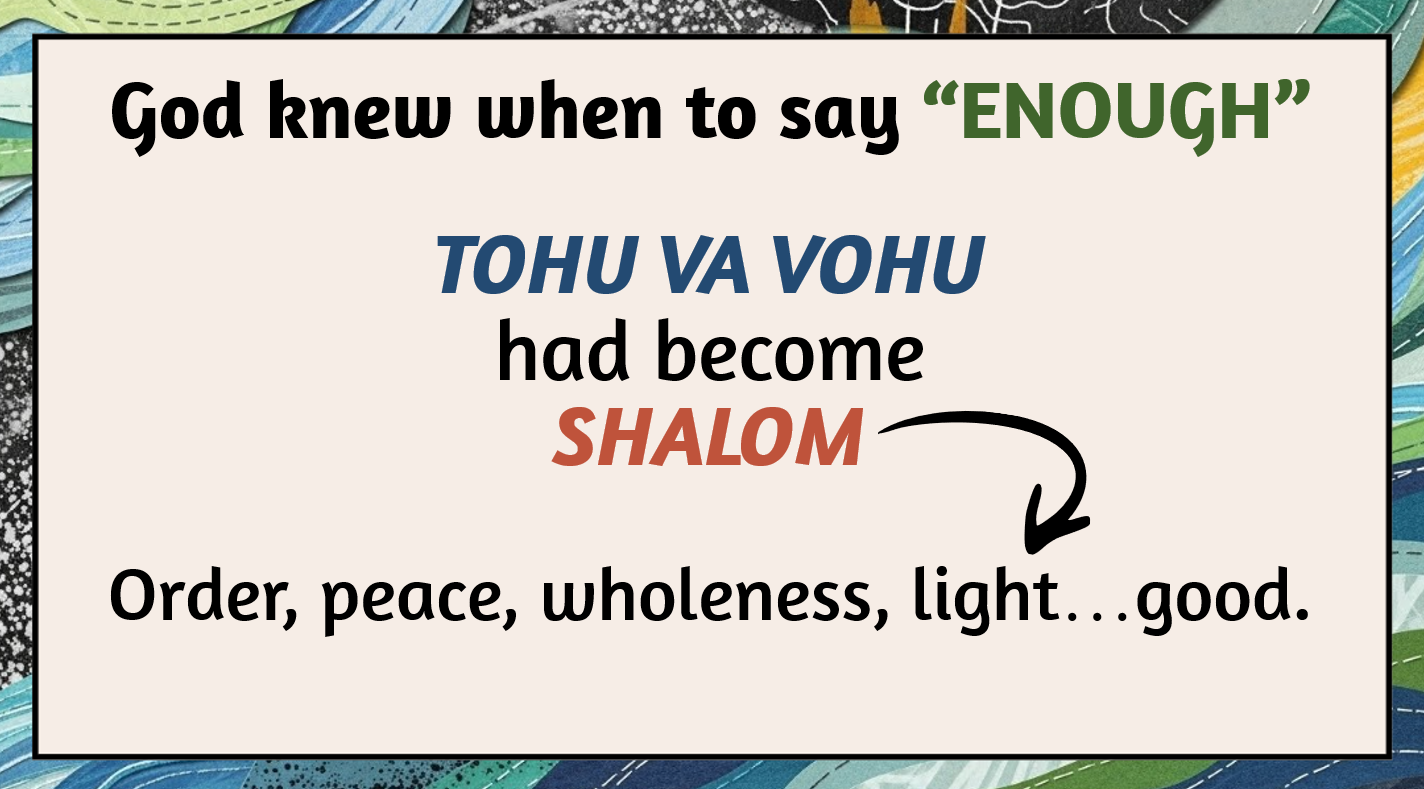
God didn't rest because He was exhausted. God rested because the work was done.
Think about creating something—a book, a song, a project. You're writing and editing and rewriting. There's always this voice in your head saying: "It can be better. There's still more to do. One more edit. One more fix." The pressure to keep going is relentless.
But eventually, you have to come to a point where you say: Enough. It's done. It's good.
That's what God did. After six days of separating and filling, ordering and shaping, God stepped back and said it was very good. And then He stopped. Not because He was tired, but because it was complete. Things were the way they were supposed to be.
The seventh day wasn't about God needing sleep. It was about God declaring, "This is finished. This is whole. This is shalom."
What does it feel like in your own life when you know something is complete and good?
The Day That Never Ends
So that brings me to my second big question: Why doesn't the seventh day have an ending?
Jewish scholars have noticed this for thousands of years. And most of them believe it's totally intentional. When you're reading Scripture, patterns matter. When something breaks the pattern you've come to expect, that's when you need to pay attention. That's when God might be trying to tell you something.
Here, six days follow the pattern. Seven breaks it.
It's like that unfinished Hallelujah chorus. That unfinished football game. Except this time, I don't think it's a mistake.
I think it's an invitation.
What if that missing ending means the seventh day never truly closes? What if it's telling us something about God's rest—not as a one-time event, but as an ongoing reality?
What if it's telling you that your story isn't finished yet?
Whatever your life looks like right now—whether it's been a few years of living or many decades—your story is not complete. There's still an open space. The seventh day of your life is still unfolding.
And here's the part that gets me:
There's still a Sabbath rest available to you.
The New Testament writer of Hebrews picked up on this same thing. He wrote: "God's works were completed at the foundation of the world. God rested on the seventh day from all of his works. So you see that a Sabbath rest is left open for God's people."
A Sabbath rest is left open for you. It's not closed. It's not locked away in the past. It's available right now.
What would it mean for you to step into that rest?
Grace Comes First
I want to tell you something important about how the day actually begins, at least in the Jewish way of thinking.
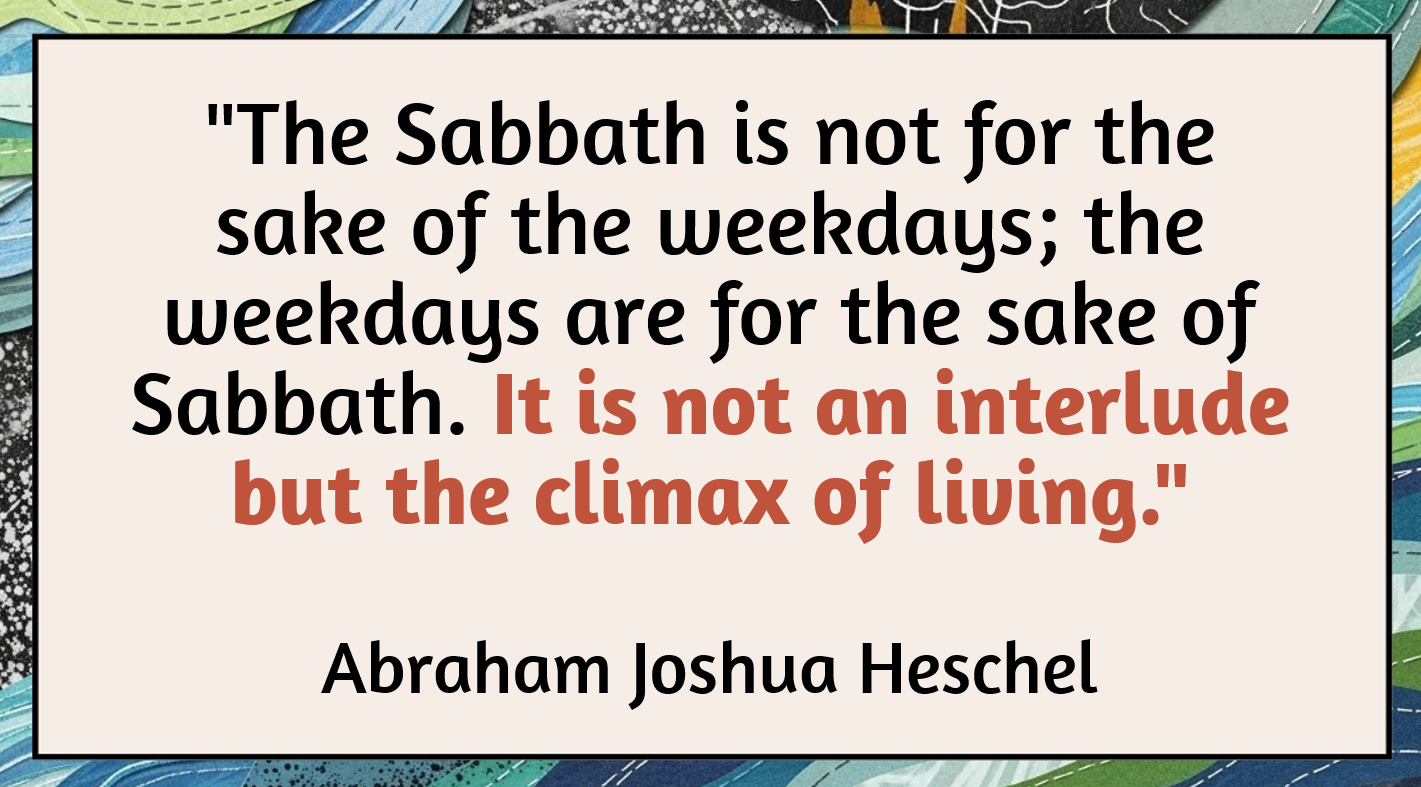
The day doesn't start when you wake up and begin doing things. The day starts at sunset, when the sun goes down and you rest. When you stop. When you simply be.
The new day begins with rest, not with work. With receiving, not achieving. With being, not doing.
I know that sounds backward. We're taught that you wake up, you get to work, you're productive, and that's how a day begins. But the Scripture is saying something different: Your day begins when you rest and remember that you're loved.
Why does this matter? Because imagine being enslaved in Egypt for generations. Imagine your whole life being nothing but work. Sunrise to sunset. Seven days a week. Your value as a human being comes down to one question: What can you produce? Can you meet the quota? Can you produce enough? If not, they just increase the quota.
You are defined by what you do. That's it. That's your worth.
And then one day, someone tells you this story about a God who didn't just work, work, work, but actually stopped. A God who rested. A God who told His people to rest, too.
A God who said, "You are not defined by what you produce. You are not valued for what you do. You are valued because of who you are. You are my beloved."
That would have been revolutionary.
And it still is.
Because here's the truth: You are loved by God before you do anything.
Before you achieve anything. Before you produce anything. Before you accomplish a single thing.
I'm a parent. I have children. And I remember this so clearly—laying them down when they were small and just staring at them for the longest time. They're not doing anything. They're not achieving anything. They're not helping me out. In fact, they're demanding everything from me.
And yet my love for them? It's absolutely complete. Totally full. Not because they earn it, but because they're mine.
This is grace. Grace comes first. Not as a reward for good behavior. Not as something you earn. But as a gift, simply because you belong to God.
When was the last time you truly rested in that love?
Sabbath as Rebellion
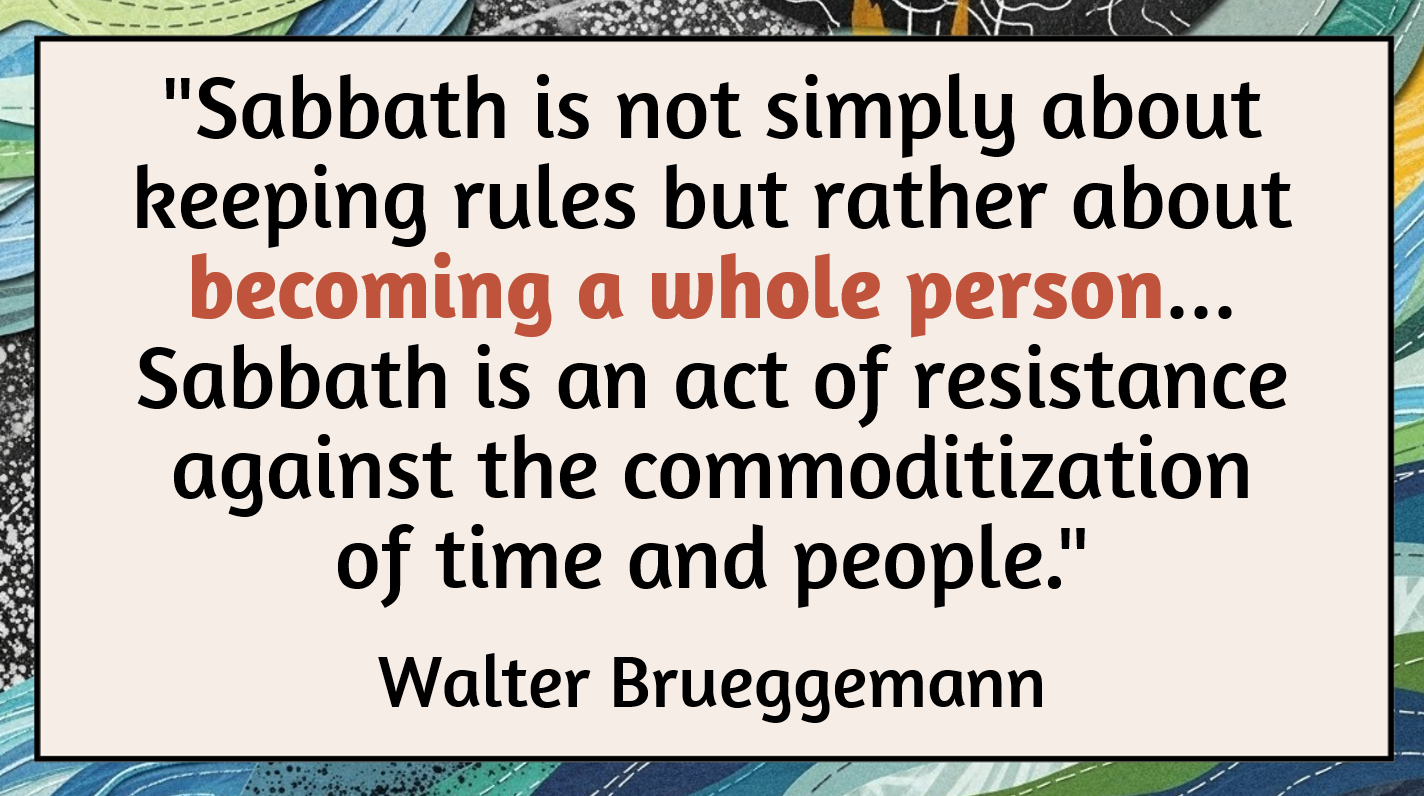
Here's something I learned: In our world right now, Sabbath is actually an act of rebellion.
Our culture says: "Produce or die. Earn your keep. You are what you do."
Sabbath says: "No. You're loved before you produce anything."
Our world says, "If you stop, you're lazy. If you rest, you're wasting time. If you take a break, you're not serious enough."
Sabbath says: "Stopping takes strength. Saying 'enough' requires courage. Rest is holy."
Our world says, "Your worth must be earned. You are only as good as your last achievement."
Sabbath says: "Jesus loves me. This I know. For the Bible tells me so. I am loved because I'm God's child."
Do you believe that?
Sabbath isn't about following rules. It's not about doing it "right." It's about becoming a whole person—someone who knows they have worth before doing a single thing.
It's about refusing to let a broken system tell you who you are.
What Sabbath Actually Looks Like
Here's what I want you to know: Sabbath can look like a lot of different things. There's no one "right" way to do it.
Sabbath might be sleeping in. Taking a walk. Playing games with your family. Eating slowly and actually tasting your food. Spending unhurried time with God and the people you love.
Maybe it's finally reading that book sitting on your end table. Maybe it's a real conversation with a friend or neighbor. Maybe it's singing hymns or karaoke or getting outside on a hike.
I heard about someone who shaves every day, but on the Sabbath, they don't. They look in the mirror and remember: "God loves me anyway. I don't need to perform today."
I heard about someone who's a neat freak but on the Sabbath leaves the bed unmade and dishes in the sink. It makes them uncomfortable. And that discomfort reminds them of something important: "I'm not loved because my home is perfect. I'm loved because I'm God's child."
Sabbath challenges our addiction to productivity. It challenges our need to always be doing something, fixing something, improving something.
On the Sabbath, you can leave things undone. You don't have to check your phone. You don't have to earn anything. You just get to be.
What would it feel like to stop trying to be perfect for one day?
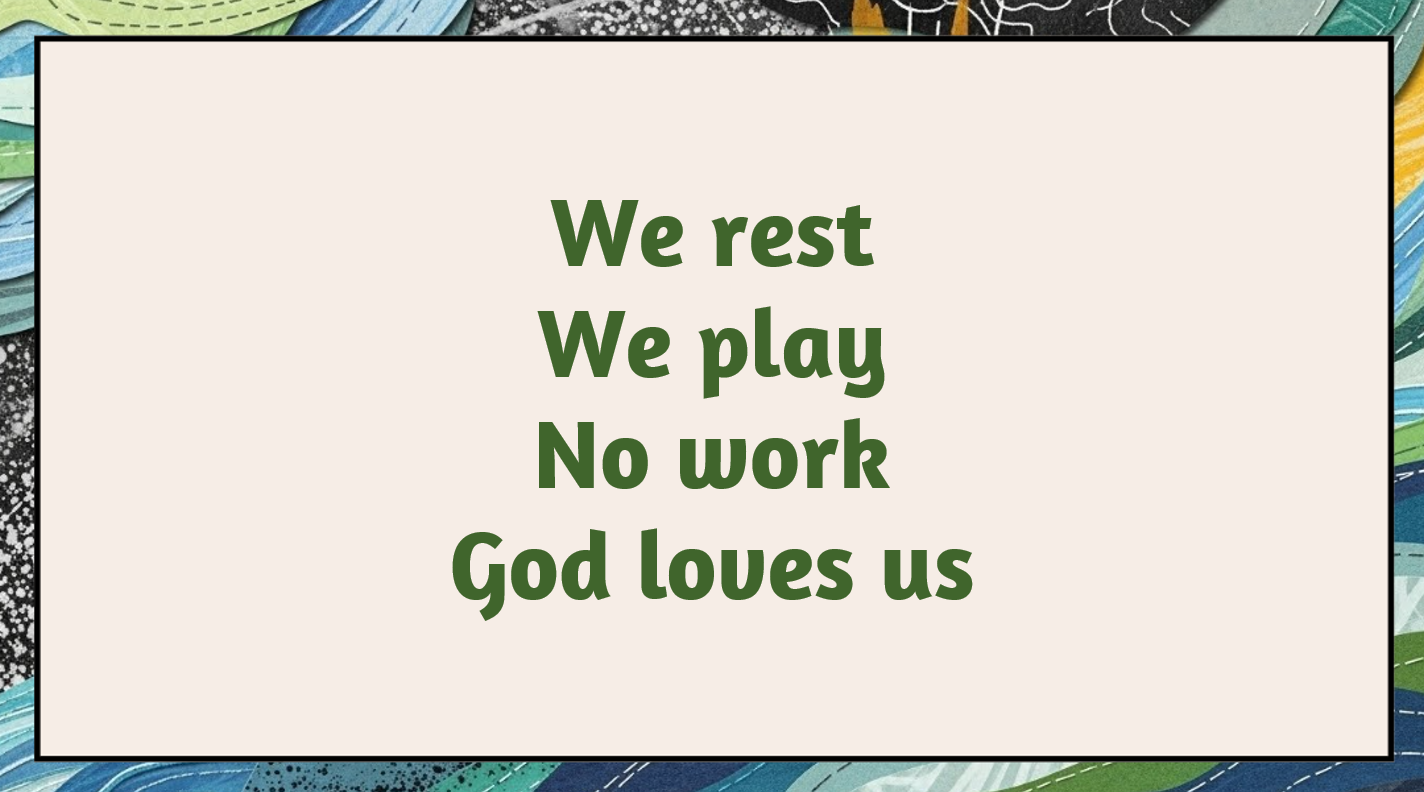
Made for More Than Doing
Here's something I need you to hear:
You were created for Sabbath.
You were created for worship and rest. You were created to celebrate and to serve. You were created for a life of love—love for God and love for the people around you.
All of us—no matter how different we look, where we come from, what language we speak, what color our skin is—were created in God's image. We were made for good because God creates good things.
And that includes rest.
That includes a day—a real day, maybe even just 24 hours—where you step away from doing and step into being. Where you remember who you are apart from your accomplishments.
The Bible says: "The Sabbath was made for people, not people for the Sabbath."
God created this time for you because He knew you would need it. Your body needs it. Your soul needs it. Your relationships need it.
Two Ways to Begin
I have two things I'd like you to actually do this week. You got double homework because I couldn't decide which one was more important.
First: Practice a Genesis 1 Week
Each night when you go to bed, thank God for the beginning of a new day. Thank Him for the opportunity to lay down and rest. Thank Him that you're loved simply because you are.
Then, when you wake up the next morning, thank God for the opportunity to work and do the things He's given you to do. Ask Him to help you do your work in such a way that His grace flows through you to others.
Do this for seven days. Let your life begin each evening with rest and remembrance instead of beginning each morning with striving.
Second: Practice a 24-Hour Sabbath
This might be the challenging one. I'm going to challenge you to plan and practice a full 24-hour Sabbath sometime this week. It doesn't have to be Sunday. It can be any day.
If you can, try to do it from sundown to sundown, just like the Scripture suggests. Do things that connect you with God. Do things that deepen your relationships. Do things that bring you joy and peace. Do things that help you remember you're loved for who you are, not what you do.
And journal it. Write down what happens. And here's the important part: Tell someone about it.
Share what you experienced. Tell someone what God is revealing to you. When we tell each other what we're going through and what God is teaching us, we deepen our friendships. We create real fellowship.
Remember: You were created for the good things of God. And Sabbath is one of those very good things. Not something you earn. Not something you have to do perfectly. Just something God offers you because He loves you.
Let every sunset remind you: You are loved before you do anything. You are enough. You are home.
That's not the end of your story. That's the beginning of a day that never ends.
If you enjoyed this article, please consider becoming a paid subscriber...or giving one-time "thank you" gift -- THANKS!
 Steven E Fairbanks
 Steven E Fairbanks